

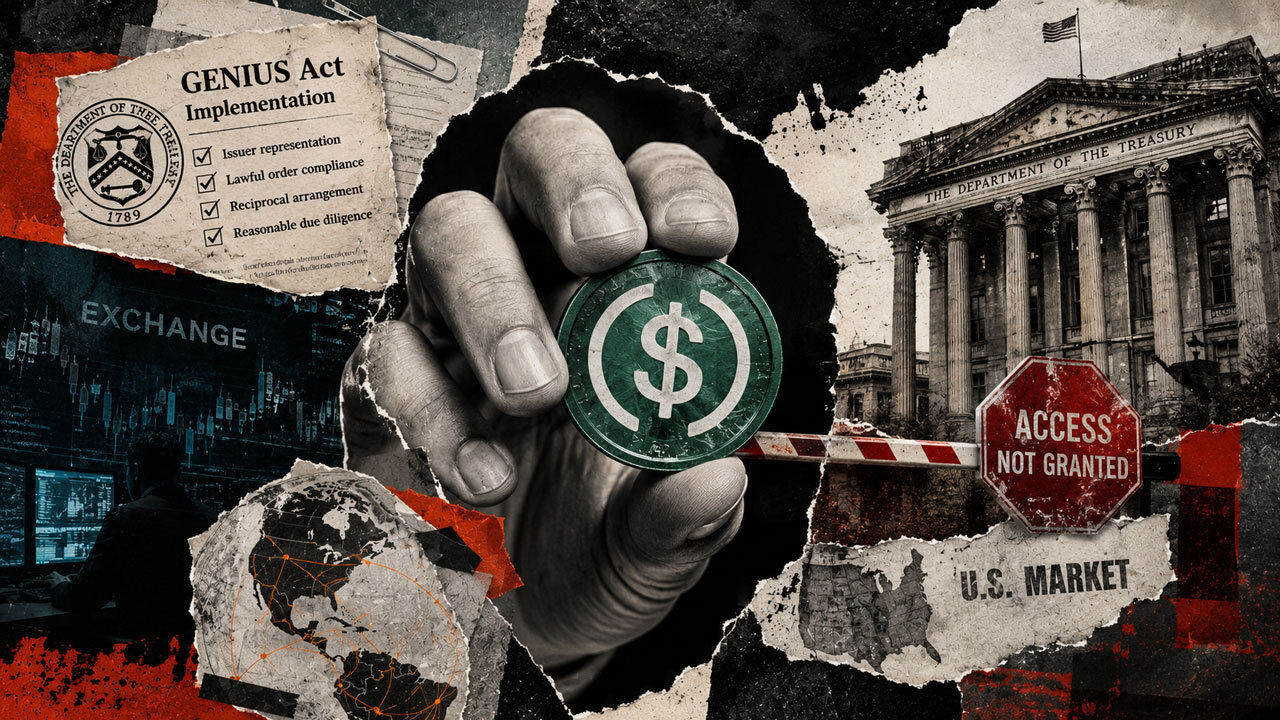
Treasury’s proposed rules under the GENIUS Act, the new US stablecoin law, would let US exchanges and other digital-asset service providers keep offering some foreign-issued payment stablecoins, but only if they can defend why they trusted the issuer’s promise to comply with lawful US orders.
Under the proposed rule, a provider could rely on a foreign issuer’s representation that it has the technology and intent to comply with lawful orders, such as valid orders to freeze or seize tokens where applicable, and reciprocal arrangements only after conducting reasonable due diligence. Reliance would be barred when the platform knows, has reason to know or should know that the representation is false or the issuer cannot or will not comply.
Treasury says that diligence should, at minimum, confirm the issuer is not subject to a public GENIUS Act prohibition on secondary trading. That check would not be enough on its own. Platforms would also need to consider all reasonably available information about the issuer.
That standard shifts the access decision to the businesses that list, sell, custody or otherwise make stablecoins available to US customers. The proposal does not identify qualifying tokens or decide whether USDT or any other named stablecoin can remain available.
Two gates for foreign issuers
The proposal has two timing points. Treasury expects the Act’s general regime to take effect on Jan. 18, 2027, unless final implementing rules trigger an earlier date under the statute. A stricter offering limit would begin July 18, 2028.
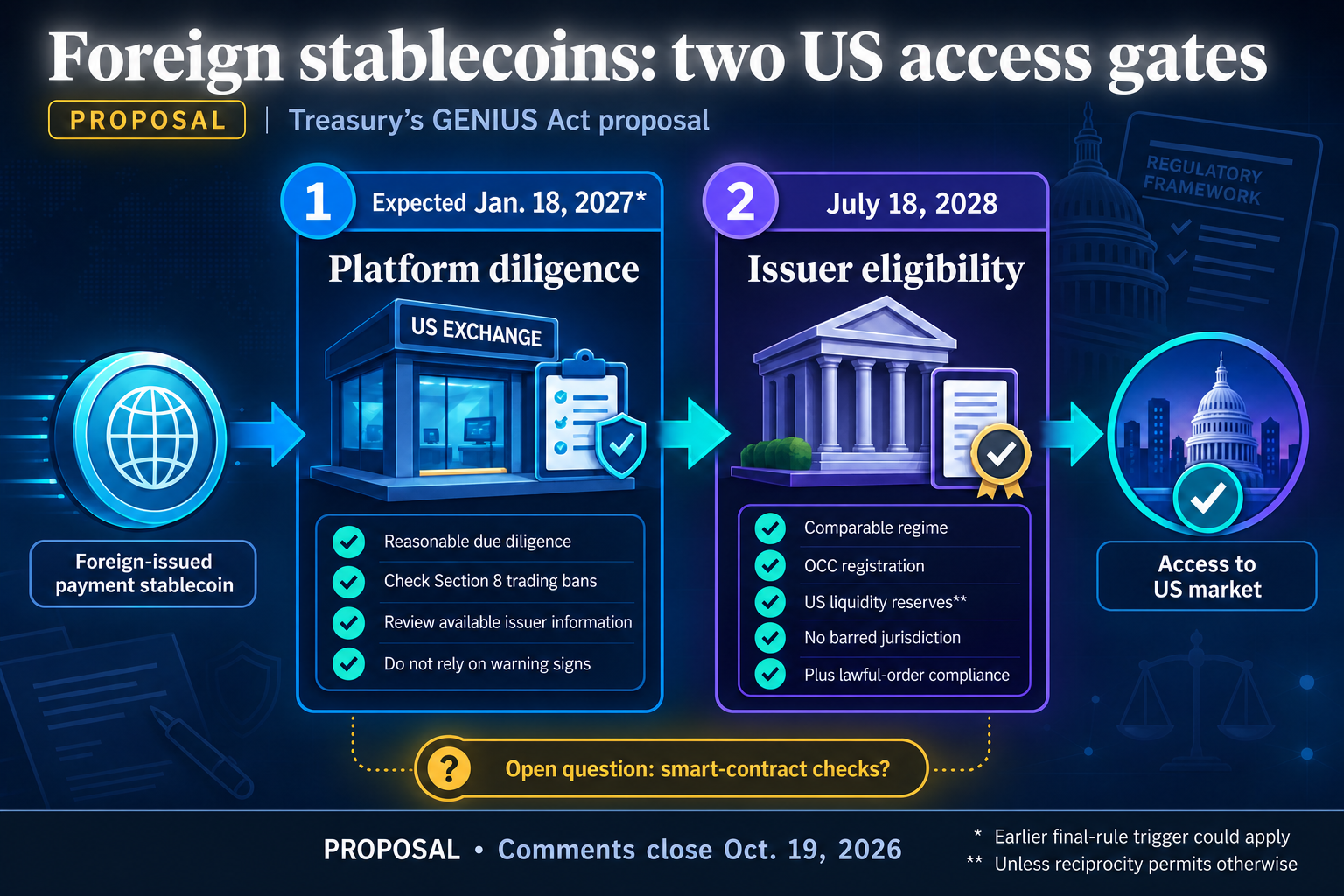
From that later date, a covered provider generally could offer or sell a payment stablecoin to someone in the US only if it came from a permitted US issuer or a foreign issuer meeting Section 18 requirements. A qualifying foreign issuer would need supervision under a regime Treasury finds comparable, registration with the Office of the Comptroller of the Currency and sufficient reserves at a US financial institution for US customer liquidity unless a reciprocal arrangement provides otherwise. Its jurisdiction also could not be under comprehensive US sanctions or designated a primary money laundering concern.
Those issuer-level tests would sit alongside the platform’s diligence over lawful-order compliance. Even a foreign issuer with a potential Section 18 route would not receive an automatic pass from the exchange carrying its token.
The proposal is not a blanket ban on holding or directly transferring foreign stablecoins. Its exemptions include lawful direct transfers between individuals without an intermediary, certain same-parent transfers between an individual’s US and foreign accounts, and transactions through software or hardware wallets used for the individual’s own custody.
What counts as adequate platform diligence remains unsettled. Treasury is asking whether the final rule should require written or regularly updated issuer representations, record retention, smart-contract review, or checks of seize, freeze and burn functions. Those are questions, not current mandates.
Comments on the Federal Register proposal close Oct. 19, 2026. Until Treasury finalizes the standard and regulators make issuer-specific decisions, US availability will depend on categories and compliance evidence rather than a published list of approved foreign stablecoins.


